
Global Vision, Local Craftsmanship, Building Partnerships Beyond Borders
Views: 0 Author: Site Editor Publish Time: 2026-07-15 Origin: Site


The TV stand serves as the functional and visual anchor of your living room. It bears the weight of expensive electronics while dictating the entire room's design language. Buyers constantly face a distinct friction point: choosing between the traditional, heavy-duty appeal of wood and the sleek, highly durable nature of metal. Making the right choice depends on specific success criteria, including load-bearing requirements, environmental factors like humidity or high traffic, and your long-term interior design goals. This guide evaluates both materials to help you select the optimal foundation for your entertainment center, ensuring your equipment remains secure and your space looks cohesive.
Durability vs. Wear: Metal offers superior resistance to ambient moisture and structural sagging, while solid wood provides unmatched longevity if properly maintained against scratches and humidity.
Cost-to-Lifespan Ratio: Metal units generally offer a lower barrier to entry with high structural integrity, whereas solid wood requires a premium upfront investment for a generational lifespan.
Aesthetic Flexibility: Wood dominates classic, rustic, and mid-century aesthetics; metal excels in industrial, contemporary, and utilitarian spaces.
The Hybrid Alternative: Combining wood and metal frames offers the optimal balance of acoustic performance, structural durability, and visual warmth.
Practicality: Metal stands are typically lighter and easier to assemble/relocate, making them ideal for renters or frequent movers, whereas solid wood requires permanent placement planning.
Before selecting a material, you must define the static weight limit required for your setup. Modern televisions are lighter than older models, but accompanying AV equipment adds significant stress. Heavy receivers, amplifiers, and gaming consoles stack up quickly. The stand must support this combined weight without bowing over time. When you place a 75-inch screen on a weak surface, the center will eventually sag. You need a rigid frame that distributes weight evenly across all contact points.
Consider the footprint of your devices. A wide base requires a stand with continuous support underneath. If you use a soundbar, factor in its placement and weight. Always check the manufacturer's specified weight limit and aim for a stand that exceeds your total equipment weight by at least twenty percent to ensure long-term stability.
Electronics generate heat, making proper ventilation necessary. Enclosed stands can trap heat, leading to thermal throttling or premature hardware failure. Material choice impacts how easily you can route cables and how well the unit dissipates heat. Open-frame designs naturally allow better airflow, while closed cabinets require strategic ventilation cutouts.
When routing thick HDMI and power cables, you need ample clearance. Wood cabinets often feature simple drilled holes, which can fray cables if not fitted with grommets. Metal units frequently incorporate stamped channels or mesh panels that facilitate both airflow and organized cable routing. Plan your wiring layout before committing to a specific cabinet style.
Assess your daily living situation. The presence of toddlers or large pets increases the risk of impact damage, scratching, and chewing. Ambient room humidity plays a major role in material longevity, particularly in non-climate-controlled spaces. Wood expands and contracts with moisture changes, which can stress joints over time.
Consider your frequency of relocation. Heavy, rigid furniture complicates moving. Solid wood pieces often require two or more people to lift safely. Modular or lighter pieces offer flexibility for renters or those who frequently rearrange their living spaces. Evaluate how the furniture will fit into your lifestyle over the next five to ten years.
Buyers frequently make errors during the selection process. Common mistakes include ignoring the TV base footprint compared to the stand's depth, resulting in overhang. This creates a tipping hazard. Underestimating the total component weight is another frequent issue that leads to structural failure.
Choosing low-grade engineered woods that bow under minimal load often leads to replacement within the first year. Always measure your available floor space and compare it against the stand's exact dimensions. Factor in baseboard depth and wall clearance for cables to ensure a flush, clean installation.
Wood furniture exists on a broad spectrum of quality. Premium hardwoods, such as walnut and oak, offer exceptional density and a lifespan exceeding a decade. These materials resist denting and provide a solid foundation for heavy equipment. Accessible softwoods like pine, or structural plywoods like birch, provide reliable support for budget-conscious projects.
Low-tier engineered woods, including MDF and particleboard, offer temporary solutions but lack the structural integrity required for heavy, long-term loads. They are prone to moisture damage and fastener pull-out. When assembling MDF units, over-tightening screws easily strips the material, compromising the entire structure.
Solid wood possesses natural acoustic dampening properties. Dense wood absorbs sound vibrations from subwoofers and large speakers, preventing annoying rattles during heavy bass sequences. This makes hardwood an excellent choice for audiophiles building a dedicated home theater setup.
Thermally, wood acts as an insulator rather than a conductor. It will not transfer ambient room heat directly to your electronics. However, this insulating property means enclosed wood cabinets require active ventilation, such as installed cooling fans, to prevent heat buildup from amplifiers and gaming consoles.
Wood furniture carries a psychological weight, easily establishing itself as the centerpiece of a room. It brings organic warmth and texture that synthetic materials struggle to replicate. The grain patterns in natural wood ensure that every piece is unique.
A significant advantage of solid wood is its repairability. Surfaces can be sanded, stained, and refinished over decades to match evolving interior design trends or repair surface damage. Minor scratches can be buffed out or filled, extending the usable life of the furniture indefinitely.
Steel and aluminum frames provide exceptional rigidity. Unlike cheaper engineered woods that warp or sag under heavy loads, a well-constructed metal TV stand maintains its perfectly level surface indefinitely. The inherent strength of metal allows for thinner profiles and more open designs without sacrificing load-bearing capacity.
Welded joints in metal furniture offer superior shear strength compared to wooden dowels or cam-lock fasteners. This structural integrity ensures the stand remains stable even when bumped or moved. Metal frames do not suffer from joint loosening caused by seasonal humidity changes.
Metal manufacturing processes, such as stamping, bending, and welding, allow high-quality, high-strength units to be produced efficiently. This efficiency means that a robust metal unit can often be acquired at a more accessible entry point compared to custom or solid wood carpentry.
The standardized production of metal components ensures precise fitment during assembly. Threaded inserts and machine screws provide secure connections that can be assembled and disassembled multiple times without degrading the material, unlike wood screws driven directly into timber.
The rise of the modern metal tv stand cabinet has aligned perfectly with minimalist and contemporary interior design trends. Clean lines and powder-coated finishes integrate seamlessly into modern spaces. These units often feature modular shelving that can be adjusted to accommodate various equipment sizes.
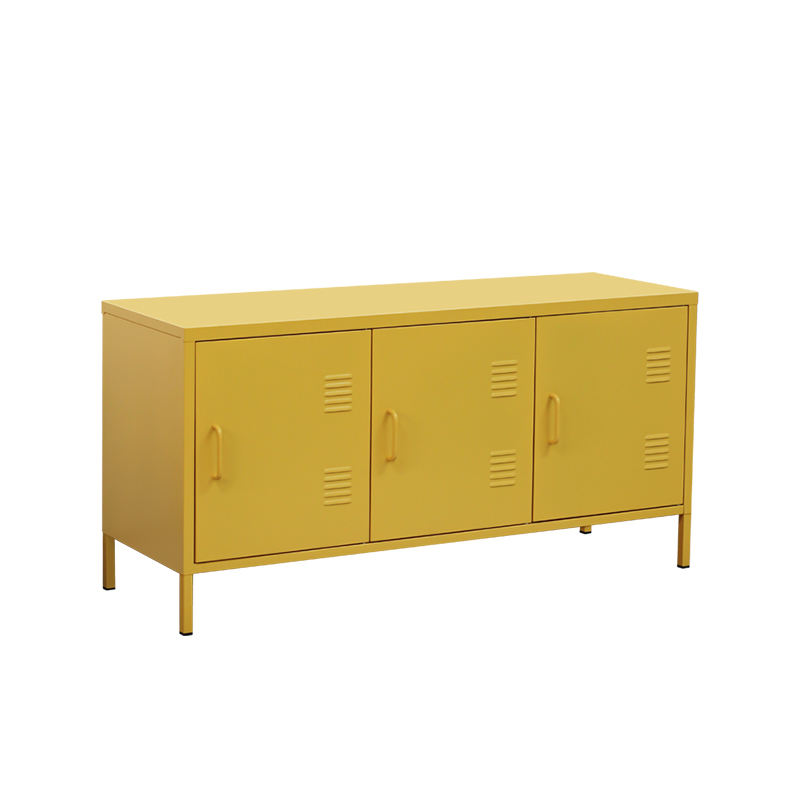
For niche aesthetic applications, incorporating a retro locker style sideboard injects an eclectic, industrial loft vibe into the living room. Designers also utilize bold color choices; integrating a yellow metal storage cabinet serves as a high-contrast focal point in an otherwise neutral room.
Effective storage is vital for a clean entertainment setup. A three door tv stand cabinet constructed from metal provides secure, opaque storage. This hides messy cables, gaming peripherals, and physical media while maintaining a sleek, uninterrupted exterior profile.
Metal doors often feature magnetic closures and louvers for subtle ventilation. The rigid nature of metal allows for precise door alignment, preventing the sagging hinges commonly seen on heavy wooden cabinet doors over time.
Combining a heavy metal chassis with solid wood shelving or drawers is frequently rated as the best overall solution for high-traffic homes. This hybrid approach utilizes the uncompromising structural rigidity of steel frames while leveraging the aesthetic warmth and acoustic benefits of wood surfaces.
The metal framework handles the primary load-bearing duties, preventing any long-term sagging. The wood components provide a tactile, visually appealing interface for daily use. This combination maximizes the strengths of both materials while minimizing their respective weaknesses.
A hybrid unit successfully softens the coldness often associated with pure metal furniture. It structurally supports heavy AV setups without requiring the massive investment of a fully solid hardwood unit. This blend fits seamlessly into rustic-industrial, farmhouse, and transitional decor styles.
The contrast between matte black steel and warm wood tones creates visual interest. This versatility allows hybrid stands to complement a wide range of existing living room furniture, making them a safe choice for evolving interior designs.
Hybrid designs strategically place durable materials where they are needed most. Metal legs and outer edges protect the piece from high-impact vacuum bumps, moving damage, and pet chewing. These are the areas most susceptible to wear in a busy household.
Meanwhile, wood top surfaces provide scratch-resistant, visually appealing spaces for televisions and decor. If the wood surface does sustain damage, it can often be sanded and refinished without needing to replace the entire structural frame.
Evaluation Criteria | Solid Wood | Metal |
|---|---|---|
Durability & Wear | Susceptible to water rings, pet scratches, and denting (especially softwoods). | Highly resistant to impact and pet damage; powder-coating prevents rust. |
Weight & Mobility | Heavy, often pre-assembled, difficult to move. | Lighter framework, often flat-packed, easier to relocate. |
Maintenance | Requires polishing, dusting, and humidity control. | Simple wipe-and-go cleaning; requires no specialized products. |
Structural Integrity | Excellent if hardwood; MDF/particleboard will sag over time. | Superior rigidity; immune to sagging regardless of humidity. |
Acoustic Dampening | High; absorbs vibrations from heavy bass. | Low; can rattle if not properly isolated with rubber pads. |
Wood is naturally softer and susceptible to environmental wear. Water rings from glasses, pet scratches, and denting are common, particularly with softwoods like pine. You must use coasters and avoid dragging heavy objects across the surface to maintain its appearance.
Metal is highly resistant to daily impact and pet damage. Utilizing powder-coated finishes is necessary for metal units to prevent surface scratching and long-term rust. Powder coating bonds thermally to the metal, creating a shell that outlasts standard liquid paint.
Solid wood units are heavy and frequently arrive pre-assembled, requiring multiple people to position. Moving a solid oak cabinet up a flight of stairs is a significant logistical challenge. Once placed, they tend to stay in that exact location for years.
Metal frames are often designed as flat-pack furniture, resulting in a lighter overall weight that is easier to assemble, disassemble, and move between residences. The use of machine screws allows you to break down the unit for transport without damaging the connection points.
Wood demands ongoing care, including periodic polishing, oiling, and strict humidity control to prevent cracking. You must keep it away from direct sunlight to prevent uneven fading of the stain or finish.
Metal surfaces offer a simple cleaning reality, requiring only a damp cloth to remove dust and fingerprints. They do not require specialized wood cleaners or oils, making them highly practical for busy households that prioritize low-maintenance furniture.
Pure metal furniture can sometimes make a living space feel sterile or industrial. Mitigate this by opting for hybrid designs that incorporate solid wood shelving. You can also soften the surrounding space by introducing textured textiles, rugs, and warm ambient lighting to balance the room's feel.
Incorporate plants or fabric storage bins onto the metal shelves to break up the rigid lines. The contrast between organic materials and industrial metal creates a balanced, inviting atmosphere.
A common concern is that metal enclosures will block Wi-Fi routers, Bluetooth signals, or infrared remote commands. Address this by selecting metal cabinets with open-mesh doors, perforated panels, or by strategically placing wireless routers on top of the unit rather than inside a closed metal box.
If you must place a router inside a metal cabinet, ensure the back panel is open or use external antennas to route the signal outside the enclosure. Test your remote controls before finalizing your equipment placement.
Solid wood reacts to environmental changes, expanding and contracting with humidity. Mitigate the risk of warping or cracking by never placing solid wood stands directly over active heating vents or in non-climate-controlled environments like garages or enclosed patios.
Maintain a consistent indoor humidity level between thirty and fifty percent. Use a humidifier during dry winter months to prevent the wood from drying out and splitting along the grain.
Measure your television's exact base width and depth to ensure the stand provides adequate surface area without overhang.
Calculate the total combined weight of your TV, receiver, and gaming consoles to verify it falls safely below the stand's static load limit.
Assess your room's primary design style and daily traffic levels to determine if a pure metal, solid wood, or hybrid unit makes the most sense.
Map out your cable routing and ventilation needs before purchasing a fully enclosed cabinet.
A: Solid metal enclosures can dampen Wi-Fi and Bluetooth signals. To prevent interference, place routers on top of the stand or choose a metal cabinet with perforated or mesh doors that allow signals to pass through easily.
A: Not necessarily. While premium hardwood is exceptionally strong, steel or aluminum frames offer superior rigidity and will never bow or sag over time, making metal highly reliable for heavy loads.
A: Choose a unit with a high-quality powder-coated finish rather than standard paint. Powder coating creates a hard, durable barrier that resists scratching, chipping, and moisture-induced rust.
A: Yes, they are highly durable and resist chewing and impact damage better than wood. Ensure the stand is properly anchored to the wall to prevent tipping, and check that the metal edges are rounded or filed smooth.
A: Yes. Mixing industrial metal pieces with traditional furniture creates an eclectic, transitional aesthetic. Use transitional decor items like wood trays or fabric runners to bridge the gap between the contrasting styles.
A: A wood-and-metal hybrid is often best. The metal frame withstands impacts from vacuums and foot traffic, while the wood top provides a durable, scratch-resistant surface that adds warmth to the room.


