
Global Vision, Local Craftsmanship, Building Partnerships Beyond Borders
Views: 0 Author: Site Editor Publish Time: 2026-07-19 Origin: Site


Selecting the right foundation for your home entertainment system requires balancing heavy-duty structural support with room aesthetics, cable management, and thermal ventilation. Buyers often struggle to find a unit that can safely hold large modern screens while accommodating the heat and wiring demands of advanced AV equipment. Flimsy particleboard furniture frequently requires replacement after a few years of use, suffering from sagging shelves and peeling veneers. In contrast, industrial-grade metal furniture offers lifetime durability and unwavering structural integrity.
Upgrading to a solid metal unit solves the core problems of weight distribution and equipment protection. A well-engineered metal TV stand provides the necessary static load capacity for heavy displays and receivers without compromising on modern design. This guide presents a technical evaluation framework for selecting a metal media console based on spatial requirements, load-bearing capacities, hardware longevity, and specific storage configurations.
The Sizing Rule: A stable, visually balanced setup requires the stand to extend a minimum of 2 to 3 inches beyond the physical width of the TV on both sides.
Material Superiority: Solid, cold-rolled steel and metal alloys provide superior static weight capacity and a longer functional lifespan, far exceeding the 5-to-8-year average of cheaper glass-and-metal or mixed-material alternatives.
Thermal & Cable Management: Enclosed metal storage protects high-value AV equipment from dust but necessitates strategic planning for heat dissipation and cable routing.
Aesthetic Versatility: Modern manufacturing allows metal stands—from vibrant powder-coated options to hybrid steel designs—to serve as bold focal points or minimalist industrial anchors without sacrificing utility.
Modern televisions between 65 and 85 inches exert significant downward force, requiring a foundation with high tensile strength. A durable steel accent cabinet easily outperforms standard MDF or particleboard, which tends to bow under sustained heavy loads. Cold-rolled steel maintains its structural shape, ensuring the top panel remains perfectly flat even when supporting massive screens. When you place a 100-pound television on a wooden composite stand, the center unsupported span will inevitably deflect over time. Steel framing eliminates this deflection entirely.
To determine your total weight capacity requirements, you must calculate the combined mass of your equipment. Add the weight of the television, center-channel speakers, gaming consoles, heavy AV receivers, and soundbars. A standard 7.2 channel AV receiver alone can weigh upwards of 35 pounds. Metal units typically offer static load limits exceeding 200 to 300 pounds, providing a wide safety margin. Furthermore, heavier metal bases lower the center of gravity. This inherent weight prevents tipping hazards in high-traffic areas, making them significantly safer for households with active environments.
When evaluating load limits, pay attention to the gauge of the steel used. 18-gauge or 20-gauge steel provides excellent rigidity for media consoles. The structural integrity also relies on the internal bracing. Look for units that feature welded cross-supports under the primary top shelf, as these distribute the point-load of heavy television stands across the vertical uprights rather than letting the flat panel bear the brunt of the weight.
Investing in 100% solid steel or heavy-duty alloy construction guarantees a functional lifespan that spans decades. Common budget glass-and-metal alternatives average a much shorter 5-to-8-year lifespan. These hybrid units often fail due to tempered glass vulnerabilities, joint fatigue, and loosening hardware over time. Tempered glass shelves, while aesthetically pleasing to some, carry a constant risk of shattering if a heavy component is dropped or if the glass suffers a micro-fracture on its edge.
Solid metal possesses an inherent resistance to environmental degradation. It will not warp under heavy loads, swell from moisture exposure, or suffer from pest damage. Unlike wood veneers that peel or chip when bumped by vacuum cleaners, a solid metal chassis maintains its integrity through years of daily use. The joints in a metal cabinet, whether welded or secured with heavy-duty machine screws, do not loosen in the same way that cam-lock fasteners tear out of particleboard.
Furthermore, the structural lifespan of metal allows for multiple relocations. Moving a cheap composite stand often results in stripped screws and wobbly frames. A solid steel unit can be loaded onto a moving truck, transported across the country, and set up in a new home without losing any of its original rigidity.
Metal furniture offers distinct low-maintenance benefits. It holds up exceptionally well to physical wear-and-tear compared to delicate wood finishes that require constant polishing and scratch repair. The non-porous surface of metal prevents liquid absorption, making spill cleanup immediate and harmless to the structure. You never have to worry about a cold drink leaving a permanent water ring on a steel top.
Cleaning protocols depend slightly on the finish. For powder-coated surfaces, a simple wipe with a damp microfiber cloth removes smudges and dust without leaving streaks. Raw or brushed steel may require occasional treatment with a specialized metal cleaner to prevent fingerprints and inhibit surface corrosion, though modern clear-coats largely eliminate this concern. Avoid using abrasive scouring pads on any painted or coated metal, as this will dull the finish and potentially expose the raw steel underneath to ambient moisture.
Consumers often confuse a television's diagonal screen measurement with its actual physical width. A 65-inch TV is typically about 57 inches wide. Placing a 57-inch wide TV on a 55-inch stand creates a top-heavy, visually disproportionate setup that is highly susceptible to accidental bumps. The edges of the screen overhang the furniture, creating a snag hazard for anyone walking past.
To prevent bump-hazards and ensure aesthetic proportion, the stand must be at least 4 to 6 inches wider than the TV's total physical width. This leaves a minimum of 2 to 3 inches of clearance on both sides. This extra space protects the fragile edges of the screen and provides a stable, visually grounded appearance in the room. If you plan to place bookshelf speakers on the same surface, you must add the width of both speakers plus an additional 4 inches of breathing room to your total required stand width.
Here is a quick reference for matching physical TV widths to minimum stand widths:
55-inch TV (approx. 48 inches wide) requires a minimum 52-inch stand.
65-inch TV (approx. 57 inches wide) requires a minimum 61-inch stand.
75-inch TV (approx. 66 inches wide) requires a minimum 70-inch stand.
85-inch TV (approx. 75 inches wide) requires a minimum 79-inch stand.
Viewing comfort dictates the height of your furniture. Standard seating heights place the viewer's eye level around 42 inches from the floor. For optimal ergonomics, the center of your television screen should align directly with this 42-inch mark to prevent neck strain during extended viewing sessions. Mounting a TV too high is the most common mistake in home theater setups, leading to physical discomfort and degraded viewing angles.
When selecting a unit, factor in the stand's height alongside the TV's included base or any aftermarket table-top mount. A massive 85-inch screen requires a much lower console to keep the center of the screen at eye level, whereas a smaller 50-inch screen might necessitate a taller cabinet to achieve the same ergonomic positioning. Measure the distance from the bottom of your TV to the center of the screen, subtract that number from 42, and the result is your ideal stand height.
Depth is a critical, often overlooked dimension. Oversized AV receivers, high-end soundbars, and modern gaming consoles require substantial shelf depth to sit flat without overhanging the front edge. Measure your deepest component, including the volume knobs on the front and the speaker binding posts on the rear. A standard receiver often requires at least 16 to 18 inches of usable internal depth.
You must also verify the need for rear clearance. Stiff HDMI cables, heavy-gauge power cords, and speaker wires require at least two inches of space behind the equipment. If the cabinet lacks adequate depth, you will be forced to push the unit away from the wall, compromising the clean look of your room setup. Look for units that offer recessed back panels or completely open rear architectures to accommodate stiff cable bends without stressing the connection ports on your expensive electronics.
Choosing between open shelving and enclosed cabinets involves evaluating trade-offs. Open shelving provides unobstructed infrared (IR) remote access and maximum passive airflow for hot electronics. However, it leaves your expensive gear exposed to dust, accidental spills, and physical damage. Open units also require meticulous cable management, as every wire is visible to the room.
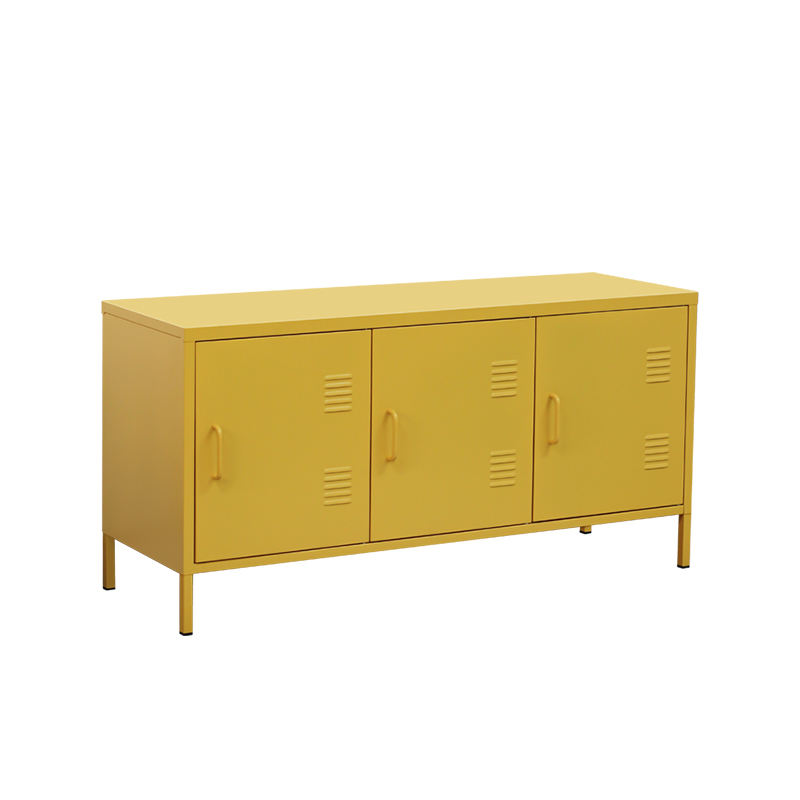
Enclosed cabinets offer superior protection and a cleaner aesthetic by hiding visual clutter. Utilizing a 3-door metal media console allows you to compartmentalize your setup. You can dedicate one section to high-density cable zones and network switches, while keeping display items and gaming peripherals neatly organized in the remaining compartments. If you choose solid metal doors, remember that IR signals will not penetrate the steel. You will need to install an IR repeater system, which uses a small external receiver to relay remote commands to emitters placed inside the cabinet.
Housing amplifiers, receivers, and gaming consoles inside enclosed metal environments requires strict attention to heat dissipation. Electronics generate significant thermal output, and a sealed metal box can quickly become an oven, leading to thermal throttling or premature hardware failure. Heat rises, so the top shelf of an enclosed cabinet will always be the hottest zone.
Identify critical ventilation features before purchasing. Look for units featuring heavily perforated backing panels or mesh metal doors that allow heat to escape naturally. For high-heat setups, ensure the cabinet has accommodations or pre-cut grommets to install active USB cooling fans to force hot air out of the enclosure. A simple 120mm quiet fan pulling air out of the back of the cabinet can drop internal temperatures by 15 degrees, significantly extending the life of your AV receiver.
Effective cable management separates a professional installation from a messy one. Evaluate the size, placement, and edge-finishing of rear grommets. Raw metal edges can slice through cable insulation over time; ensure the routing holes feature rubberized or rolled edges to prevent cable fraying. The holes must be large enough to pass a standard three-prong power plug, not just a slim HDMI cable.
Plan strategies for mounting power bricks and surge protectors internally. Securing power strips to the inside back wall of the cabinet keeps heavy cords off the floor and maintains a clean exterior profile. Ample internal routing space allows you to separate power cables from signal cables. Running power and audio cables parallel to each other can introduce electromagnetic interference (EMI) into your speakers. Keep them separated, or cross them at 90-degree angles to maintain audio clarity.
Storage Type | Airflow / Thermal Management | Dust Protection | Cable Concealment |
|---|---|---|---|
Open Shelving | Excellent (Unrestricted) | Poor | Low |
Solid Metal Doors | Poor (Requires active cooling) | Excellent | High |
Perforated/Mesh Doors | Good (Allows passive exhaust) | Moderate | High |
Metal furniture naturally complements loft-style or modern minimalist interiors. The integration of raw metal, matte black finishes, and exposed hardware creates a rugged, utilitarian aesthetic. These designs rely on clean lines and geometric simplicity, allowing the structural materials to serve as the primary visual draw without overwhelming the space. Exposed rivets, heavy-duty casters, and welded seams highlight the manufacturing process and add authenticity to industrial decor.
Metal does not have to be dark or industrial. You can utilize a yellow metal tv stand cabinet to create a high-contrast focal point in otherwise neutral or monochromatic living spaces. Brightly colored metal units inject personality and energy into a room, breaking up the monotony of standard wood tones and gray fabrics.
The durability of baked-on powder coating ensures these vibrant colors remain intact. Unlike painted wood that chips easily, powder coating bonds to the metal surface through an electrostatic process and is cured under high heat. This creates a thick, resilient shell that resists scratches, fading from UV exposure, and general wear, keeping the accent piece looking new for years even in sunlit rooms.
For spaces that require a softer touch, hybrid designs bridge the gap between industrial and transitional decor. Pairing a steel chassis with fluted glass doors, brass handles, or solid wood tops softens the harshness of pure metal. This combination provides the structural benefits of steel while introducing warm textures that blend seamlessly with traditional living room furniture. Fluted glass is particularly effective, as it obscures the messy wiring and blinking lights of electronics while still allowing IR remote signals to pass through.
The market for multi-functional metal configurations is expanding, including units with integrated electric fireplaces or built-in metal hutch shelves. These hybrids maximize vertical space and consolidate room features into a single footprint, which is highly beneficial for smaller apartments or open-concept living areas.
When placing electronics directly above metal-housed heating elements, thermal isolation is paramount. Ensure the unit features a heavily insulated barrier between the firebox and the media shelves to prevent radiant heat from damaging sensitive AV receivers or melting plastic console casings. The metal frame will conduct heat, so verify that the manufacturer has engineered thermal breaks into the chassis to keep the upper equipment zones cool while the fireplace operates.
Shipping flat-pack metal stands reduces freight costs and makes moving boxes into tight spaces easier. However, flat-pack assembly often involves aligning heavy metal paneling and dealing with tight tolerances. Fully assembled, structurally welded options offer superior rigidity out of the box but require wider doorways and higher shipping fees. Welded units have zero risk of loosening fasteners over time, making them the ultimate choice for heavy loads.
Common alignment challenges with flat-pack units involve threaded inserts that can cross-thread if forced. Use specific tools to prevent damage. A rubber mallet helps tap stubborn panels into place without denting the finish, while a magnetic ratcheting screwdriver provides control to prevent stripping delicate metal threads during final tightening. Never use a high-torque power drill to assemble metal furniture, as it will easily strip the tapped holes in the steel framing.
Heavy metal legs pose a severe risk of scratching hardwood, tile, or engineered floors, especially when loaded with hundreds of pounds of equipment. Dragging a fully loaded metal console even a few inches can cause deep gouges that require expensive floor refinishing.
Mandate the use of adjustable leveling feet equipped with nylon glides or heavy-duty felt pads. These protect the flooring and allow you to perfectly level the console on uneven surfaces, ensuring the doors hang squarely and the television remains perfectly horizontal. If your floor has a significant slope, adjustable feet with at least one inch of thread travel will allow you to compensate and stabilize the entire rig.
Metal media consoles offer unmatched structural durability and distinct aesthetic appeal, provided buyers carefully account for thermal ventilation and cable management. By moving away from fragile particleboard, you secure a foundation capable of supporting the heaviest modern displays while protecting your high-value electronics from physical damage and sagging shelves.
To finalize your selection, prioritize physical width by ensuring the unit is 4 to 6 inches wider than your television. Verify the static weight limits against your heaviest AV receiver, and choose storage types based on the specific heat output of your equipment to prevent thermal throttling.
Take the following steps before purchasing:
Measure your current TV's exact physical width from bezel edge to bezel edge.
Inventory the depth of your deepest electronic component, adding two inches for rear cable clearance.
Calculate the total weight of your equipment to ensure it falls well below the manufacturer's static load rating.
Filter available options by the necessary load capacity and confirm the presence of adjustable leveling feet for floor protection.
A: A stable and visually balanced setup requires the stand to be at least 4 to 6 inches wider than the TV's total physical width. This provides a minimum of 2 to 3 inches of clearance on both sides, preventing bump hazards and ensuring the display does not look top-heavy.
A: Yes, solid metal doors will completely block infrared signals from standard remote controls. To control equipment inside an enclosed metal cabinet, you must choose units with mesh doors, fluted glass panels, or install an aftermarket IR repeater system to relay the signals inside.
A: It is safe only if properly protected. The heavy weight of metal legs can easily scratch or gouge hardwood and tile. You must use adjustable leveling feet equipped with thick nylon glides or heavy-duty felt pads to distribute the weight and protect the floor surface.
A: Prevent overheating by selecting cabinets with heavily perforated back panels or mesh front doors to allow passive airflow. Leave at least two inches of clearance around heat-generating devices like amplifiers. For extreme heat, install active USB cooling fans to force hot air out of the enclosure.
A: Yes, steel is inherently strong and capable of supporting large displays. However, you must verify that the specific static load rating of the top panel exceeds the combined weight of your 75-inch TV and any additional equipment placed on top of the cabinet.


