
Global Vision, Local Craftsmanship, Building Partnerships Beyond Borders
Views: 0 Author: Site Editor Publish Time: 2026-07-31 Origin: Site


Choosing the wrong storage material leads to premature replacement, damaged inventory, and compromised security. When evaluating options, you must balance immediate budget constraints with long-term requirements for load capacity, environmental resilience, and aesthetic integration. Wood and MDF serve as middle-ground alternatives. They offer decent aesthetics but lack the absolute moisture resistance of plastic and the sheer structural integrity of steel. Ultimately, the choice usually boils down to a high-density plastic unit versus a heavy-duty metal storage cabinet.
To determine the best fit for your space, you must analyze structural integrity, specific environmental use cases, and installation profiles. This guide breaks down the performance metrics of both materials. We will evaluate load limits, environmental vulnerabilities, and mounting requirements to help you select a storage solution that aligns with your operational and spatial demands.
Metal dominates in load-bearing capacity, longevity, and security, while plastic offers advantages in upfront cost and absolute moisture resistance.
Upgrading to a cold rolled steel storage cabinet provides superior dent resistance and structural rigidity compared to standard aluminum or molded plastics.
Aesthetic versatility has evolved; metal storage is no longer confined to garages and now frequently serves as a modern living room storage cabinet in contemporary design.
Understanding structural configurations (freestanding vs. wall-mounted) is critical, as metal allows for secure overhead wall anchoring that plastic cannot safely support.
Before comparing materials, you must establish baseline requirements for your space. Storage needs vary wildly depending on what you are storing and where the unit will live. Defining these parameters prevents under-equipping your space or overspending on unnecessary features. You need to look at the physical demands placed on the shelving and the environmental realities of the room.
Load-bearing requirements dictate the structural baseline. You must differentiate between static weight and dynamic weight. Static weight involves the long-term storage of heavy items like engine parts, bulk hardware, or dense paper archives. These items sit in one place for months, applying constant downward pressure. Dynamic weight accounts for the frequent loading and unloading of tools, equipment, or daily supplies. The constant shifting of weight tests the shear strength of the shelf supports and the rigidity of the frame.
Environmental exposure plays a massive role in material selection. Humidity, temperature fluctuations, and direct UV light accelerate material degradation differently across plastics and metals. A damp basement presents a completely different challenge than a sun-baked outdoor shed or a climate-controlled office. You have to account for the worst-case scenario in your specific environment.
Security and access control define the necessary threshold for protecting valuable tools, sensitive documents, or hazardous materials from unauthorized access. A simple latch might keep a child out of cleaning supplies, but it will not stop a determined thief from accessing expensive power tools. Finally, analyze your installation profile. Determine if spatial constraints require a freestanding heavy-duty standing unit or a wall-mounted configuration to maximize available floor space.
Measure the exact dimensions of your available floor space, accounting for door swing clearance.
Identify the heaviest single item you plan to store to determine the minimum per-shelf weight capacity.
Assess the room for climate control, noting any seasonal spikes in humidity or temperature.
Determine if the unit needs to be bolted to the floor or wall for seismic safety or tip prevention.
Plastic storage units offer inherent resistance to rust, oxidation, and water damage. This corrosion immunity makes high-density polyethylene (HDPE) or resin cabinets highly viable for damp basements, outdoor sheds, or areas prone to minor flooding. Moisture simply cannot penetrate or degrade the material. You can spray them down with a hose to clean them without worrying about drying them perfectly.
Mobility and assembly represent another strong point. The lightweight nature of molded plastics simplifies transport. You can easily move an unassembled plastic unit in the back of a standard car. Most units feature snap-together construction, allowing for rapid, tool-free assembly. You do not need a socket set or a drill to put them together. Additionally, plastic units present a lower barrier to entry regarding the initial capital outlay, making them ideal for light-duty applications where security is not a primary concern.
They also resist many common household chemicals. If you spill bleach or motor oil on a plastic shelf, it will not eat through the material or cause immediate structural failure. This makes them a decent choice for storing basic cleaning supplies or gardening liquids in a utility room.
Despite their benefits, plastic cabinets carry significant structural risks. Thermal instability is a major factor. Plastic shelves risk warping under heavy loads in high-heat environments, such as uninsulated garages during peak summer months. Once a plastic shelf bows, it rarely returns to its original flat shape. Conversely, freezing temperatures cause cold weather brittleness. Plastic hinges and side panels can easily crack or shatter under impact when temperatures drop below freezing.
Security vulnerabilities are also prominent. Plastic locking mechanisms and molded doors flex easily. You can often bypass them or force them open with minimal effort, sometimes just by pulling hard on the handles. They offer the illusion of security rather than actual protection. Furthermore, plastic units suffer from modification and mounting limits. Adding aftermarket casters or safely wall-mounting plastic units introduces severe material shear risks. The plastic cannot support concentrated stress points, meaning screws and bolts will eventually tear through the material under load.
The structural advantage of a cold rolled steel storage cabinet lies in its manufacturing process. Cold rolling produces higher tensile strength and tighter manufacturing tolerances compared to hot rolled steel or plastic composites. The steel is compressed at room temperature, which aligns the grain structure and increases its yield strength. This results in a rigid, unyielding frame capable of supporting massive weight without deflection.
Surface protection further enhances metal's viability. Powder-coating provides a baked-on, durable finish that significantly outperforms standard liquid paint. The powder is applied electrostatically and then cured under heat, creating a hard skin that resists scratches, chipping, and fading. This coating is essential for mitigating oxidation and repelling chemical damage in harsh environments.
The gauge of the steel also dictates performance. Lower gauge numbers indicate thicker steel. A 24-gauge cabinet works well for general office supplies, but an 18-gauge or 20-gauge cabinet is necessary for heavy automotive tools or industrial equipment. The thicker the steel, the better it resists denting and twisting when fully loaded.
Metal cabinets deliver maximum weight capacity. Superior per-shelf weight limits often exceed 150 to 200 pounds. This capacity is strictly required for housing heavy machinery, automotive parts, or dense paper archives. The shelves often feature reinforced channels welded underneath to prevent bowing. Enhanced security is achieved through the integration of reinforced steel doors, fully welded frames, and multi-point locking mechanisms. These locks secure the door at the top, bottom, and center simultaneously, actively deterring theft.
Fire and chemical resistance set metal apart in hazardous environments. Steel withstands fire exposure and contains chemical spills far better than porous or meltable plastics. In a workshop fire, a steel cabinet will protect its contents much longer than a plastic unit, which will simply melt and add fuel to the fire. Additionally, metal supports accessory and modular integration. You can easily utilize magnetic organizers, heavy-duty adjustable shelving, and pre-threaded caster channels for effortless mobility.
Metal storage solutions do require a higher initial investment. The weight of steel also necessitates multi-person assembly or specialized freight shipping. You cannot easily carry a fully assembled steel cabinet up a flight of stairs by yourself. Corrosion risks exist if deep scratches compromise the powder coat in high-humidity environments. You can mitigate this by applying touch-up paint immediately to exposed steel and maintaining adequate ventilation in the storage area.
Shelf deflection rates clearly separate the two materials. Plastic bows and permanently deforms under sustained heavy weight. If you leave a heavy toolbox on a plastic shelf for a year, the shelf will sag. Metal retains its rigid, flat profile even under maximum load. Impact resistance also differs. Metal may dent when struck hard by a forklift or a heavy tool, but it remains structurally intact. Plastic, particularly in cold environments, will crack or shatter, destroying the unit's integrity entirely.
Hinge durability is another critical failure point. Plastic cabinets often use molded plastic hinges or simple metal pins inserted into plastic sleeves. Over time, the weight of the doors causes these hinges to sag, making the doors difficult to close. Metal cabinets utilize heavy-duty steel hinges, often piano hinges that run the full length of the door, ensuring smooth operation for decades.
Feature | Plastic Storage Cabinet | Metal Storage Cabinet |
|---|---|---|
Load Capacity | Low to Medium (Prone to warping) | High to Extreme (Rigid support) |
Moisture Resistance | Excellent (Immune to rust) | Good (Relies on powder coat integrity) |
Security | Low (Easily bypassed) | High (Multi-point locks, rigid doors) |
Temperature Resilience | Poor (Brittle in cold, warps in heat) | Excellent (Unaffected by standard extremes) |
Impact Resistance | Poor (Cracks or shatters) | Excellent (May dent, but holds structure) |
The entry-level dilemma forces buyers to contrast budget plastic utility models with mid-range name-brand metal standing cabinets. While plastic solves immediate, light-duty storage needs cheaply, it depreciates rapidly. A plastic cabinet left in a hot garage will likely need replacing within a few years. Quality steel cabinets retain their utility and structural value over decades, making them a superior long-term investment for serious storage needs.
You also have to consider the value of the items stored inside. If a plastic shelf collapses, it can destroy hundreds of dollars worth of tools or inventory stored below it. The structural reliability of steel acts as an insurance policy for your stored goods.
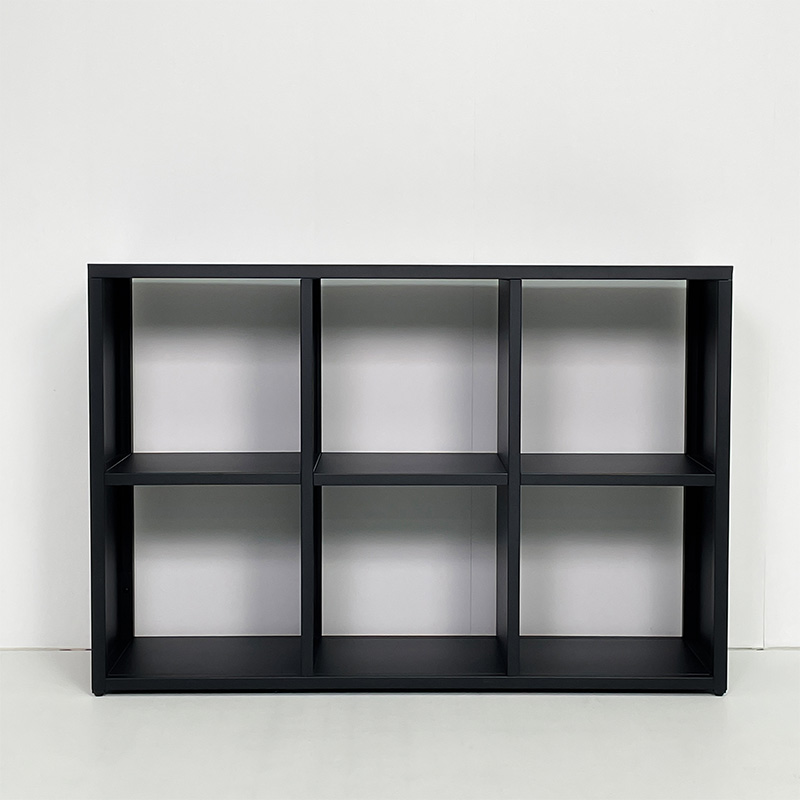
Metal has successfully transitioned from purely utilitarian spaces into residential interiors. Closed, heavy-duty metal cabinets offer a sleek, industrial look that fits well in modern lofts and minimalist homes. For spaces requiring visual lightness, open-concept storage solutions like a Black 6-Cube Open Storage Shelf or a Minimalist Metal Grid Bookcase provide excellent design variations. They allow you to display items while maintaining a strong structural framework.
A well-finished metal unit functions effectively as a modern living room storage cabinet. It offers an industrial-chic aesthetic and premium texture that molded plastic simply cannot match in a residential living space. Plastic always looks like utility storage, whereas metal can be styled to look like high-end furniture.
We recommend metal for environments requiring heavy tool storage, chemical resistance, and high security. Steel cabinets integrate seamlessly with heavy-duty wall-slat systems and withstand the daily abuse of an active workshop. They handle the weight of engine blocks, heavy power tools, and bulk hardware without flinching. The security aspect is also vital in these spaces, as garages are frequent targets for theft.
Plastic is recommended for light-duty storage in flood-prone or consistently damp areas. When climate control is absent and rust is the primary concern, plastic provides a reliable, waterproof barrier for non-valuable items. If your basement takes on an inch of water every spring, a plastic cabinet will survive without any structural degradation. Just ensure you are not storing heavy items that will cause the shelves to warp.
Metal is the optimal choice for hybrid environments where durability must meet modern design standards. Utilizing sleek finishes and modular configurations allows metal cabinets to blend seamlessly into contemporary home and office layouts. They provide secure storage for sensitive documents while contributing to the overall aesthetic of the room.
A metal storage cabinet stands as the definitive choice for heavy-duty, secure, and long-term storage. Plastic remains best reserved for light-duty, highly corrosive environments, or strict short-term scenarios. To finalize your decision, audit your heaviest items, measure environmental humidity, and determine your strict security requirements before purchasing.
Measure your available floor space and ceiling height to determine maximum cabinet dimensions.
Calculate the required shelf capacity by weighing your heaviest tools or storage bins.
Review warranty terms specifically for cold rolled steel options to ensure long-term finish protection.
Assess your floor levelness to determine if adjustable leveling legs or heavy-duty casters are required.
A: Metal cabinets typically support 150 to over 200 pounds per shelf without bending. Plastic shelves generally max out around 40 to 75 pounds per shelf and are prone to warping if the weight is sustained over long periods, especially in warm environments.
A: As long as the factory powder-coated finish remains intact, cold rolled steel resists rust effectively in unheated garages. However, if the coating is deeply scratched and exposed to high humidity or condensation, localized rust can develop.
A: No. Plastic cabinets offer minimal security. The doors and locking mechanisms can easily be flexed, pried, or broken with basic hand tools. Expensive power tools should always be stored in heavy-gauge steel cabinets with multi-point locking systems.
A: Yes. Many modern metal cabinets feature sleek, powder-coated finishes, glass-front doors, and minimalist hardware. These designs fit perfectly into industrial-chic or contemporary living spaces, offering both high durability and a premium aesthetic.
A: Extreme heat causes plastic to soften and warp under load, while freezing temperatures make it brittle and prone to shattering upon impact. Metal remains completely unaffected structurally by standard environmental temperature extremes.
A: It depends on the contents. Closed metal cabinets are better for securing sensitive documents and hiding clutter. A Minimalist Metal Grid Bookcase is ideal for displaying books, awards, and decor, providing a visually open and accessible aesthetic.


